Saturday, March 30, 2019

2018--Green Book, Peter Ferrelly


Image result for Green book

2018--Green Book, Peter Ferrelly
Nominated: BlacKkKlansman, Black Panther, Bohemian Rhapsody, The Favourite, Roma, A Star is Born, Vice
Should have won: A Star is Born
Be sure to see: Bird Box, The Darkest Minds, Death Wish,  Jumanji 2,  A Quiet Place
"Do you know where you are?"--Tony Vallelonga
"Does geography really matter?"--Don Shirley

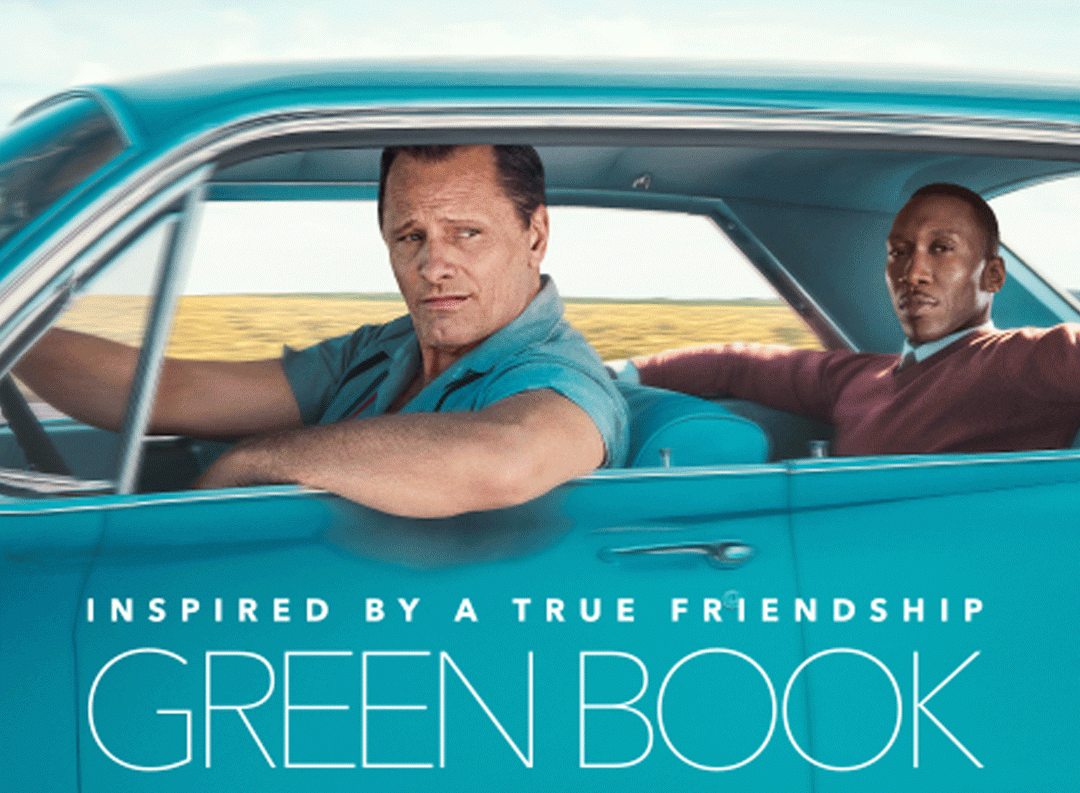
The 1989 best picture winner featured an elderly white lady whose chauffer was a kindly black gentleman. They built a friendly relationship when things could have remained simply business and their time together wound up being pleasant. The movie was Driving Miss Daisy and the 2018 winner, Green Book, reversed these roles by having a white chauffeur drive a talented black musician from city to city to perform his shows. A few years ago the "Oscars so white" twitter uproar changed how movies will be nominated. Though I typically disagree with this concept and feel the best should be nominated no matter what that means, Green Book is an example of the process getting it right. 

It is 1962 and Bobby Rydell is performing in a club for which Tony "Lipp" Vallelonga bounces. After an altercation, the club closes and Tony needs to find a job. Since he has experience driving a garbage truck, it is suggested he drive Don Shirly--the talented musician previously mentioned--across the southeastern United States to perform his gigs. I wasn't sure if gig is the correct term here though because of Shirley's stature as a serious musician but my brother who is pretty knowledgeable on the subject says it is.  Don must be pretty highly respected. After all his "office" is at Carnegi Hall. 

The title comes from a book Don's record studio gives Tony. It is essentially a guide on how to safely travel through racist areas of the South. It is called The Negro Motorist Green Book. I wondered how accurate such a book would be. One person's experience might or might not improve by following the book's advice, but that is how various self-help books would read, so I suppose this Green Book would have similar benefits. After hitting Iowa, they travel to Louisville and get Kentucky Fried Chicken. Being a Kentuckian I, of course, enjoyed their conversation on the matters of fried chicken. The movie slides in some reversals of racial stereotypes throughout the movie. For example, the black guy doesn't like fried chicken and the white guy likes music from Aretha Franklin and Little Richard while the black guy is unfamiliar, etc. 

A part of the story that seemed sweet but not important early on but played a key part later is Tony's letters. He has a way with words, and not necessarily in a good way. He promised his wife he'd write her letters from the road. His writing isn't exactly the most romantic so Don feeds him some lines to woo his wife's heart. It was sort of like a penned version of Cyrano de Bergerac.  Occasionally, the movie popped back into the life of Tony's wife back home which I felt took away from the story I would rather have been following which is the "non-buddy, buddy road movie" so to speak. But one single line is spoken by Dolores at the end that wraps the love letter aspect of the story up nicely. It is one of my favorite moments. 

The further south they go, the more racial tension they face but mostly this comes from the public and not from the concerts where Don is highly respected. I wonder if people like Nat King Cole faced similar fates while touring the south. But it occurred to me there might be a difference between well-known stars and a classical pianist who locals wouldn't recognize.  But I like how some of Don's traits brushed off onto Tony and vice versa. I said "mostly" the tension comes from the public and not the venues. When one venue doesn't follow through with its hospitality, things pan out as they should, which leads us to maybe the best gig Don Shirly ever had at the local ethnic restaurant called The Orange Bird. The piano scene at The Orange Bird was a highlight and I almost expected someone to stop Tony and tell him Adventures in Babysitting style that he couldn't leave unless he sang first. 

The movie was enjoyable but not really best picture worthy; had it been released 10 years ago it probably wouldn't have even been nominated. And the ending was completely predictable.  But I enjoyed it anyway. Mahershala Ali was good but without question Viggo Mortensen carries this movie. He has come a long way since Texas Chain Saw Massacre part 3, don't you think? 

Note: Yes, the director is the same Peter Ferrelly responsible for There's Something about Mary and Dumb and Dumber. And despite his movie winning best picture, he was not nominated for best director. In Oscar's long history this has happened only five times. The other four are Wings, Grand Hotel, Driving Miss Daisy and Argo. By the way, if you remember from the Grand Hotel review, that is the only movie to win best picture and not even be nominated for a single other award. One nomination; one win; best picture. I think that's my favorite bit of Academy Award trivia. 

Green Book: the true story behind the Oscar-buzzed road trip drama ...

Friday, August 17, 2018

2017--The Shape of Water, Guillermo del Toro


Image result for the shape of water

It 


2017--The Shape of Water, Guillermo del Toro

Nominated: Call Me By Your Name, The Darkest Hour, Dunkirk, Get Out, Lady Bird, Phantom Thread, The Post, Three Billboards Outside Ebbing, Missouri 

Should have won: Three Billboards Outside Ebbing, Missouri


Be sure to see: The Belko Experiment, Colossal, Happy Death Day, Murder on the Orient Express, Passengers, Rogue One, Split, Wind River, Wonder,  Wonder Woman
"Unable to perceive the shape of you, I find you all around me. Your presence fills my eyes with your love. It humbles my heart, for you are everywhere,"--Giles 


What would you say If I were to tell you there was a movie about a gillman, similar to the creature from the Black Lagoon, kept in a tank in the depths of a secret government laboratory and a mute cleaning woman for the facility--who masturbates regularly-- takes it home to have sex with it? If I were told this, I would think it to be the plot of a B horror movie, possibly made in the sixties, on an extremely low budget with a small cult following. Not only is it a modern film, it is a critically acclaimed Academy Award winner for best picture. Who would have believed it? 


In Universal's 1954 classic The Creature from the Black Lagoon, an expedition on the Amazon River encounters a vicious gill man who kills some of the crew and has an eye for the woman on board. I read that the idea for Shape of Water came when the movie's director, Guillermo del Toro, was watching Creature and wanted to see the gill man and the girl's romance bloom. A human/monster love story is not a new concept; in 1933's King Kong, the monster falls in love with the girl and in the two remakes, the filmmakers had the woman reciprocate his feelings. While the girl in the 1976 and 2005 versions develop compassion for the beast, in Shape of Water, cleaning woman Elisa Esposito dares to take these feeling a few steps further.

It is 1962 Baltimore and Elisa and Zelda (Octavia Spencer) spend their days cleaning up the aforementioned top secret lab. An accident causes Richard Strickland, the head of the lab (I guess that's his title) to lose a finger, and the two women are assigned to tidy up. Strickland is played by Michael Shannon, an actor IMDB says is from Lexington.You might recognize him from
Revolutionary Road or Nocturnal Animals, both of which earned him a best supporting actor nod, or perhaps his tiny part in Groundhog day. Let's hope you don't know him from the dreadful Bug. At any rate, most of the cast I could see with other actors but Shannon was perfectly cast for Strickland. He just looked menacing, even when he had nothing to say. Sometimes his facial expressions reminded me of the demented surgeon in The Human Centipede. 

While cleaning, Elisa discovers something the lab has been hiding, a gillman kept in a tank and through spying sees the torture the scientists (?) put it through. She forms a bond and begins feeding it eggs. These are the moments that sparked the thoughts of King Kong for me.It became a sort of animal compassion story. What happens later are events Ann Darrow never considered to attempt with the mighty Kong. 


  I found it funny how Elisa was able to mop in the lab during business hours. You'd think they'd keep that locked up pretty tight but she can just wonder in there and mop away. Not to mention just hang out with the subject without a plethora of scientists entering to do their experiments. But the cruelty of the experiments drive Eliza to attempt a rescue mission for the creature. Once the creature is at Eliza's apartment, in her tub, is where the story takes an awkward turn and I wonder if during the plot pitch, half the room didn't scoff. A cleaning woman rescuing a creature from a lab and then having sex with the creature? There might have been some empty seats after that. By the way, I'm not sure if my saying the rescue attempt being successful is a spoiler. At first I thought I shouldn't spill that but I think by the ads and movie posters it was common knowledge. 

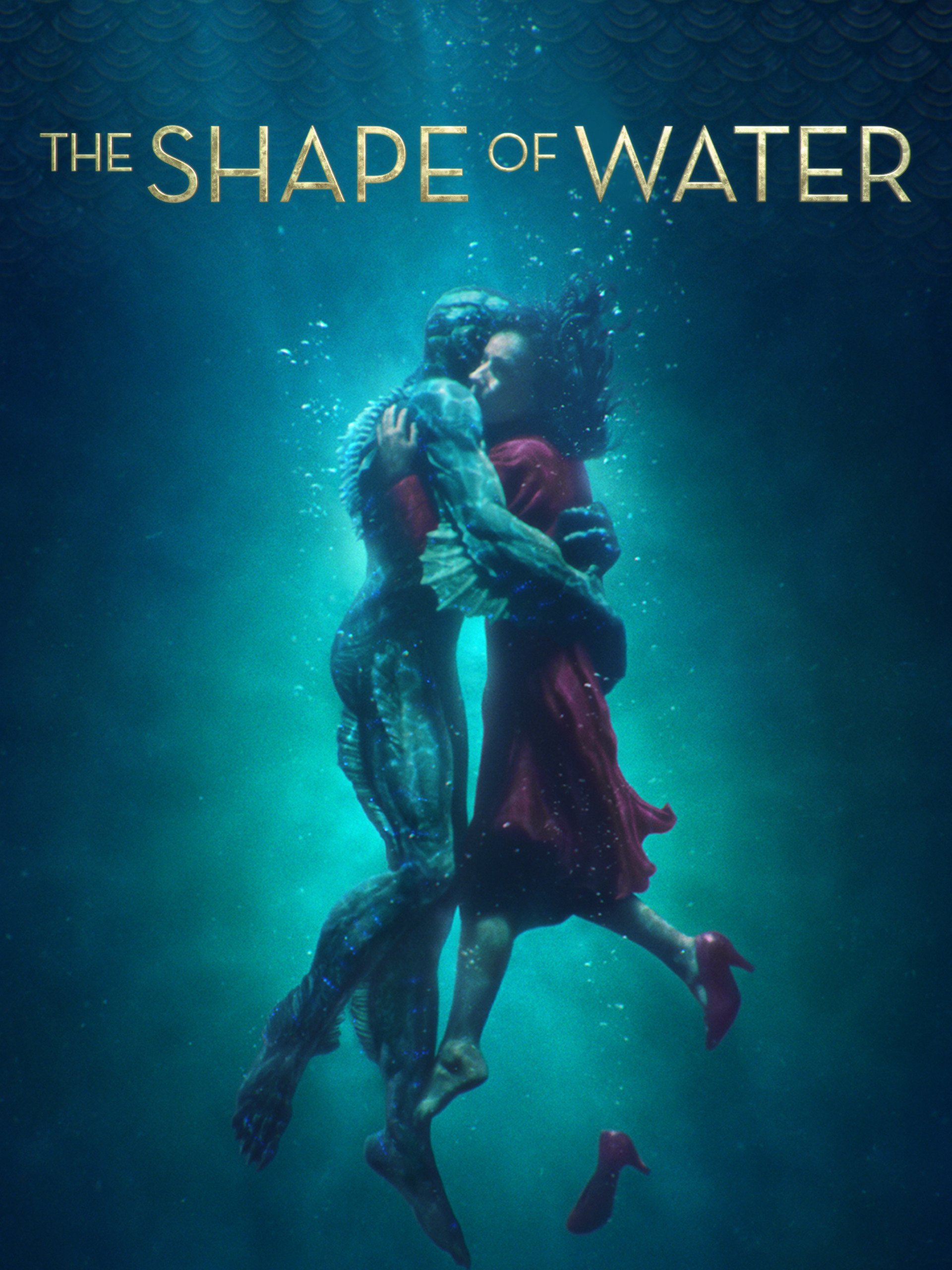
 But Elisa and her neighbor, Giles, begin to care for the creature which is certainly humanoid but with animal instincts. Giles' cat can attest to that. It is about this time that the key scene occurs where Eliza finally takes the next step in expressing her love for the creature. As you see on the movie's poster, she fills the bathroom with water to seduce the it in a scene that should have been as crazy as a Looney Toons cartoon. Yet, somehow, I bought the scene as not only possible but probable it would work. I'm sure Mythbusters would bust the goings-on in this scene but maybe not. I'm going to go with not; it is more enjoyable that way. 


Elisa has  a fantasy where she can sing and I thought that scene was both good and bad. Good because I like musicals so their dance, though brief, is well done and it was in her head so she wasn't mute anymore. But, for me, having her speak took me out of the magic for just a second. But if you can fantasize about dancing, why can't you fantasize about being able to speak and sing? So I get it, I just would have preferred Elisa remain mute. She and Giles spend time watching Shirly Temple tap movies early in the film so it was foreshadowing there would be a dance number. 
 
All in all, I enjoyed the movie. Mainly because I like monsters, even if it isn't straight horror. What sets the creature from the Black Lagoon apart from other classic monsters is we don't sympathize for him. He's a killer. Frankenstein's monster and the wolf man are tragic figures, cursed by things they can't control. The creature from the Black Lagoon is just a killer animal instinct. The Shape of Water takes a version of this creature and spins it in a new direction, giving it a heart. To date, 1991's Silence of the Lambs is the only horror movie to win best picture. The Shape of Water isn't horror but is a monster movie, and I'm glad to see the Academy knock down that monster movie barrier.


Image result for the shape of water

Thursday, March 2, 2017

2016--Moonlight, Barry Jenkins


Image result for Moonlight


2016--Moonlight, Barry Jenkins
Nominated: Arrival, Fences, Hacksaw Ridge, Hell or High Water, Hidden Figures, La La Land, Lion, Manchester By the Sea
Should have won: Lion
Be sure to see: The Boy, Deadpool, Girl on the Train, The Jungle Book, The Magnificent Seven, Swiss Army Man, The Witch
"You're not a faggot. You can be gay, but you don't have to let nobody call you a faggot."--Juan

     The 2015 Oscars caught a lot of flack for not being racially diverse. It ended up being the worst ceremony in history not because of the nominees (all of whom were deserving) but because the host, Chris Rock, made an ass of himself and a mockery of the Academy Awards' history by making racial comments at every chance. A few were expected in his monologue, but it happened all night. Because of this, it was pretty much guaranteed the 2016 awards would be more diverse. I don't feel that is a good thing just for the sake of diversity if the nominees aren't deserving. Luckily, they were. The best performances in my mind were both in Fences. One did win for supporting actress and Denzel Washington was nominated for best actor in what I feel is the his best performance of his career. But the highlight of the evening was when presenter Faye Dunaway read the wrong winner for best picture. She called the odds-on favorite La La Land only to have the announcement corrected by La La Land's producer himself. The actual winner was Moonlight.


     The first two minutes of Moonlight was one sweeping shot of Juan, a conflicted character who is a drug dealer, though still a good man. Juan finds a wondering boy and takes him home to his wife, Theresa for the night. The boy is Chirone, a quiet outsider the other kids have given the moniker Little. He rarely speaks but when he does he sounds to be about 15 though he looks 9 or 10.

    Chirone is bullied at school and at home, though not physically. His mother is a woman very easy to dislike. Clearly on drugs and jealous of her son's relationship with Juan and Theresa, she takes his money and verbally abuses him. However, I do believe her when she says she loves him. She certainly isn't evil like Precious's mother seven years ago (Mo'Nique in an Oscar winning role). It is at this young and conflicted age Chirone realizes he is gay.


     I like movies with character arcs and Chirone has one as he reaches high school and beyond. He comes into his sexuality and has an encounter with his friend Kevin. He still gets bullied but stands up for himself. It is one of those moments I cheer for a character's actions but jeer at his consequences.


     I feel the third phase of Chirone was miscast. The actors who play young and old Kevin were perfect; Jharrel Jerome and Andre Holland looked similar enough but Alex Hibbert (young Chirone) and Ashton Sanders (adult Chirone) didn't look similar at all. The older Cherone is muscular and strong while Little was...little. People grow, they work out and gain muscle, I get that. But I need an explanation because he became unrecognizable.


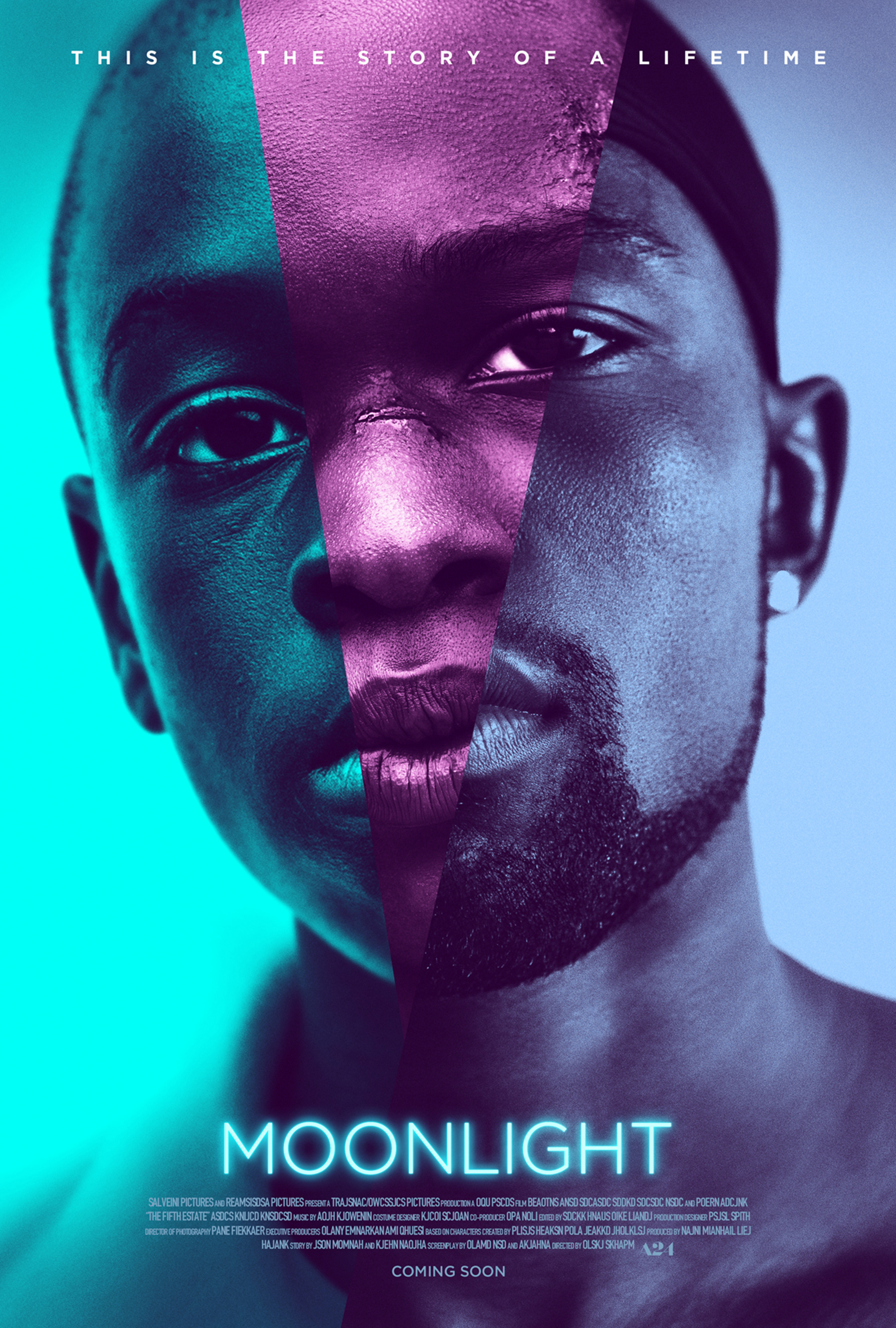
     Juan tells Chirone that his grandmother always said that in the moonlight black boys look blue. I found this interesting not just in the literal sense but also because Chirone was such a sad character; blue on the outside in the moonlight and on the inside with melancholy. I don't know if that is what the filmmakers were aiming for but that's what I took from it.


     Moonlight is the second best picture winner in a row I had never heard of before the nominees were announced. I was sure La La Land or Fences would win. After seeing it I understand why it won. It was good but I don't feel it was deserving of the award. But how could liberal Hollywood pass up the chance to award the prize to a movie about a gay black kid, especially after last year? I really hope it doesn't come down to this in future years. The best movie should win best picture; the best performances should win in their categories. Not everything has to be about politics. It is a good film and I recommend it. It is about life and circumstances not usually depicted in the movies. It probably isn't easy to grow up gay in the hood and I'm glad the story was told. I just have the feeling decades from now it will be looked at as "that movie they awarded because of the previous year" and that is very unfortunate.

 Image result for moonlight movie 2016

Saturday, April 9, 2016

2015--Spotlight, Tom McCarthy

 
2015—Spotlight, Tom McCarthy
Nominated: The Big Short, Bridge of Spies, Brooklyn, Mad Max: Fury Road, The Martian, The Revenant, Room
Should have won: The Revenant
Be sure to see: Ex Machina, Green Inferno, The Hateful 8, It Follows, Paddington, Straight Outta Compton, The Visit
“We got two stories here. A story about degenerate clergy and a story about a bunch of lawyers turning child abuse into a cottage industry. Which story do you want us to write? Because we're writing one of them.”--Walter Robinson

   The Academy has been known to award movies with important social themes over better made, more deserving ones. Forrest Gump over Pulp Fiction, A Beautiful Mind over Lord of the Rings, and In the Heat of the Night over Bonnie and Clyde all come to mind. The latest example falls in not because it isn't a worthy choice but because it is the first winner since I started paying attention to the Oscars that I'd never even heard of.

    I enjoyed Spotlight and felt its message of child abuse is important. It is particularly important this movie's message is heard for the past victims and the (hopefully few) future ones. But throughout the entire Oscars telecast (the worst in the ceremony's history, by the way, with Chris Rock proving himself to be the worst host the ceremony has ever seen, but that's another story), I was thinking how I was going to write up my thoughts on The Revenant. When Spotlight was announced as the winner I thought “What the hell is that? Did they just make up a title?” With Leonardo DiCaprio finally getting his much-deserved Oscar—one he should have gotten 22 years ago for What's Eating Gilbert Grape—and Mad Max: Fury Road snagging one award after another, Spotlight came out of nowhere to get the big prize.

    Spotlight is another “based on a true story” film but in this case it actually is. In 2001, a four-person investigative team working for the Boston Globe work tirelessly on a local child molestation story. Having a journalism degree myself I was scratching my head at how these people were earning their paycheck. The entire movie they were gathering data and doing interviews for a single story they were going to write at the movie's end. Was there nothing else going on? Was their section in the Globe blank every day? Apparently, 80 people in the Boston area claim to have been sexually abused by priests when they were younger. The movie seems to suggest they were all boys. Being raised Catholic, I remember there being alter girls as well as alter boys, and these cases don't seem to take place much earlier than when I was up there in the late '80s/early '90s. Some of the victims talk freely to reporters, others are more reluctant to talk. A surprising interviewee was a priest who appeared eager to talk, hiding nothing, throwing himself under the bus. His reasoning to why he doesn’t feel he was wrong for his actions left me confused on whether or not I should feel sorry for him.

    I liked a good deal of the movie and, if it really is a true story, it is an important story to tell, but I had some issues with it, some minor some not. The story takes place in late 2001 so, naturally, they have to show the inevitable Trade Center attack footage. I noticed they called it “nine eleven” and a refrigerator magnet said “9/11 never forget”. I don't remember bumper stickers and the like calling the event “9/11” so quickly after the event. But mostly it got me thinking what were the major news stories in the summer of 2001? What important stories were bumped off the headlines?

    The movie has its moments. My favorite shot is when one of the Spotlight team is in a cab and passes one of the victims who was interviewed earlier. Here he is pushing a child on a swing. He is coping with the past, life goes on. But did talking to the Spotlight team help or hurt his conscience? That particular character, I'm not sure of, but the ending of the film left a silver lining. The hard work Spotlight did for this story provides a bitter-sweet but appropriate conclusion to the film. Then it provides us with worldwide statistics for a depressing coda.

    The movie is good but I'd like to point out two things: 1. It is rated R but “frickin'” is said a lot. Odd for a movie that doesn't hold back on the molestation aspect. If you are going to be rated R and cover child rape, I don't see how censoring some four-letter words is necessary. And 2. I am not doubting the story is true and I'm not doubting priests still molest boys, but I was raised Catholic and I can tell you no priest ever seemed inappropriate to me. Maybe the media would rather people see the Catholics as perverts but can we also be reminded how the Catholic church is the #1 organization in the world for giving to the poor? You've heard the term a few bad apples ruin the bunch? Spotlight does a hell of a job picking them out.