Friday, August 17, 2018

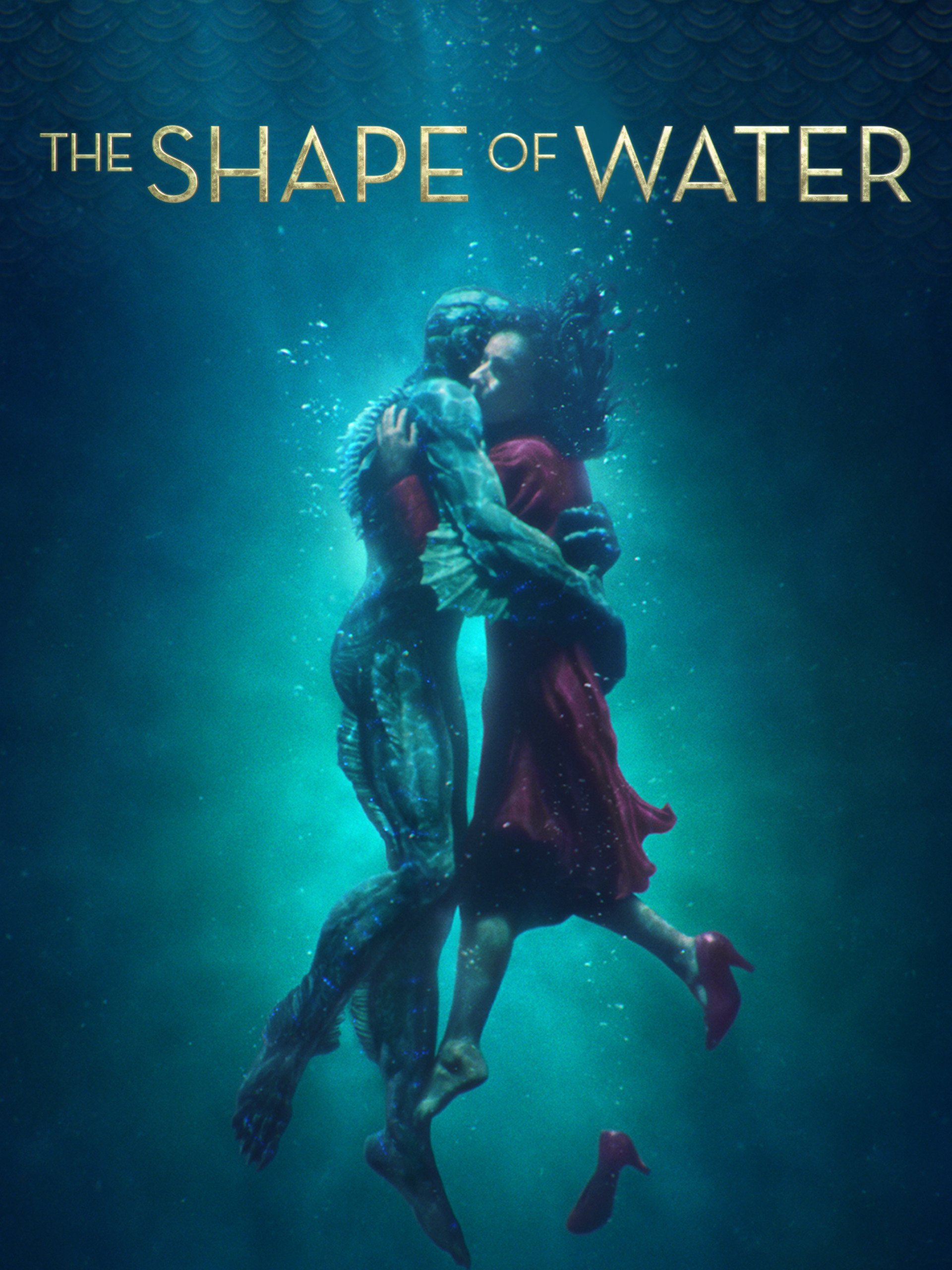
2017--The Shape of Water, Guillermo del Toro


Image result for the shape of water

It 


2017--The Shape of Water, Guillermo del Toro

Nominated: Call Me By Your Name, The Darkest Hour, Dunkirk, Get Out, Lady Bird, Phantom Thread, The Post, Three Billboards Outside Ebbing, Missouri 

Should have won: Three Billboards Outside Ebbing, Missouri


Be sure to see: The Belko Experiment, Colossal, Happy Death Day, Murder on the Orient Express, Passengers, Rogue One, Split, Wind River, Wonder,  Wonder Woman
"Unable to perceive the shape of you, I find you all around me. Your presence fills my eyes with your love. It humbles my heart, for you are everywhere,"--Giles 


What would you say If I were to tell you there was a movie about a gillman, similar to the creature from the Black Lagoon, kept in a tank in the depths of a secret government laboratory and a mute cleaning woman for the facility--who masturbates regularly-- takes it home to have sex with it? If I were told this, I would think it to be the plot of a B horror movie, possibly made in the sixties, on an extremely low budget with a small cult following. Not only is it a modern film, it is a critically acclaimed Academy Award winner for best picture. Who would have believed it? 


In Universal's 1954 classic The Creature from the Black Lagoon, an expedition on the Amazon River encounters a vicious gill man who kills some of the crew and has an eye for the woman on board. I read that the idea for Shape of Water came when the movie's director, Guillermo del Toro, was watching Creature and wanted to see the gill man and the girl's romance bloom. A human/monster love story is not a new concept; in 1933's King Kong, the monster falls in love with the girl and in the two remakes, the filmmakers had the woman reciprocate his feelings. While the girl in the 1976 and 2005 versions develop compassion for the beast, in Shape of Water, cleaning woman Elisa Esposito dares to take these feeling a few steps further.

It is 1962 Baltimore and Elisa and Zelda (Octavia Spencer) spend their days cleaning up the aforementioned top secret lab. An accident causes Richard Strickland, the head of the lab (I guess that's his title) to lose a finger, and the two women are assigned to tidy up. Strickland is played by Michael Shannon, an actor IMDB says is from Lexington.You might recognize him from
Revolutionary Road or Nocturnal Animals, both of which earned him a best supporting actor nod, or perhaps his tiny part in Groundhog day. Let's hope you don't know him from the dreadful Bug. At any rate, most of the cast I could see with other actors but Shannon was perfectly cast for Strickland. He just looked menacing, even when he had nothing to say. Sometimes his facial expressions reminded me of the demented surgeon in The Human Centipede. 

While cleaning, Elisa discovers something the lab has been hiding, a gillman kept in a tank and through spying sees the torture the scientists (?) put it through. She forms a bond and begins feeding it eggs. These are the moments that sparked the thoughts of King Kong for me.It became a sort of animal compassion story. What happens later are events Ann Darrow never considered to attempt with the mighty Kong. 


  I found it funny how Elisa was able to mop in the lab during business hours. You'd think they'd keep that locked up pretty tight but she can just wonder in there and mop away. Not to mention just hang out with the subject without a plethora of scientists entering to do their experiments. But the cruelty of the experiments drive Eliza to attempt a rescue mission for the creature. Once the creature is at Eliza's apartment, in her tub, is where the story takes an awkward turn and I wonder if during the plot pitch, half the room didn't scoff. A cleaning woman rescuing a creature from a lab and then having sex with the creature? There might have been some empty seats after that. By the way, I'm not sure if my saying the rescue attempt being successful is a spoiler. At first I thought I shouldn't spill that but I think by the ads and movie posters it was common knowledge. 

 But Elisa and her neighbor, Giles, begin to care for the creature which is certainly humanoid but with animal instincts. Giles' cat can attest to that. It is about this time that the key scene occurs where Eliza finally takes the next step in expressing her love for the creature. As you see on the movie's poster, she fills the bathroom with water to seduce the it in a scene that should have been as crazy as a Looney Toons cartoon. Yet, somehow, I bought the scene as not only possible but probable it would work. I'm sure Mythbusters would bust the goings-on in this scene but maybe not. I'm going to go with not; it is more enjoyable that way. 


Elisa has  a fantasy where she can sing and I thought that scene was both good and bad. Good because I like musicals so their dance, though brief, is well done and it was in her head so she wasn't mute anymore. But, for me, having her speak took me out of the magic for just a second. But if you can fantasize about dancing, why can't you fantasize about being able to speak and sing? So I get it, I just would have preferred Elisa remain mute. She and Giles spend time watching Shirly Temple tap movies early in the film so it was foreshadowing there would be a dance number. 
 
All in all, I enjoyed the movie. Mainly because I like monsters, even if it isn't straight horror. What sets the creature from the Black Lagoon apart from other classic monsters is we don't sympathize for him. He's a killer. Frankenstein's monster and the wolf man are tragic figures, cursed by things they can't control. The creature from the Black Lagoon is just a killer animal instinct. The Shape of Water takes a version of this creature and spins it in a new direction, giving it a heart. To date, 1991's Silence of the Lambs is the only horror movie to win best picture. The Shape of Water isn't horror but is a monster movie, and I'm glad to see the Academy knock down that monster movie barrier.


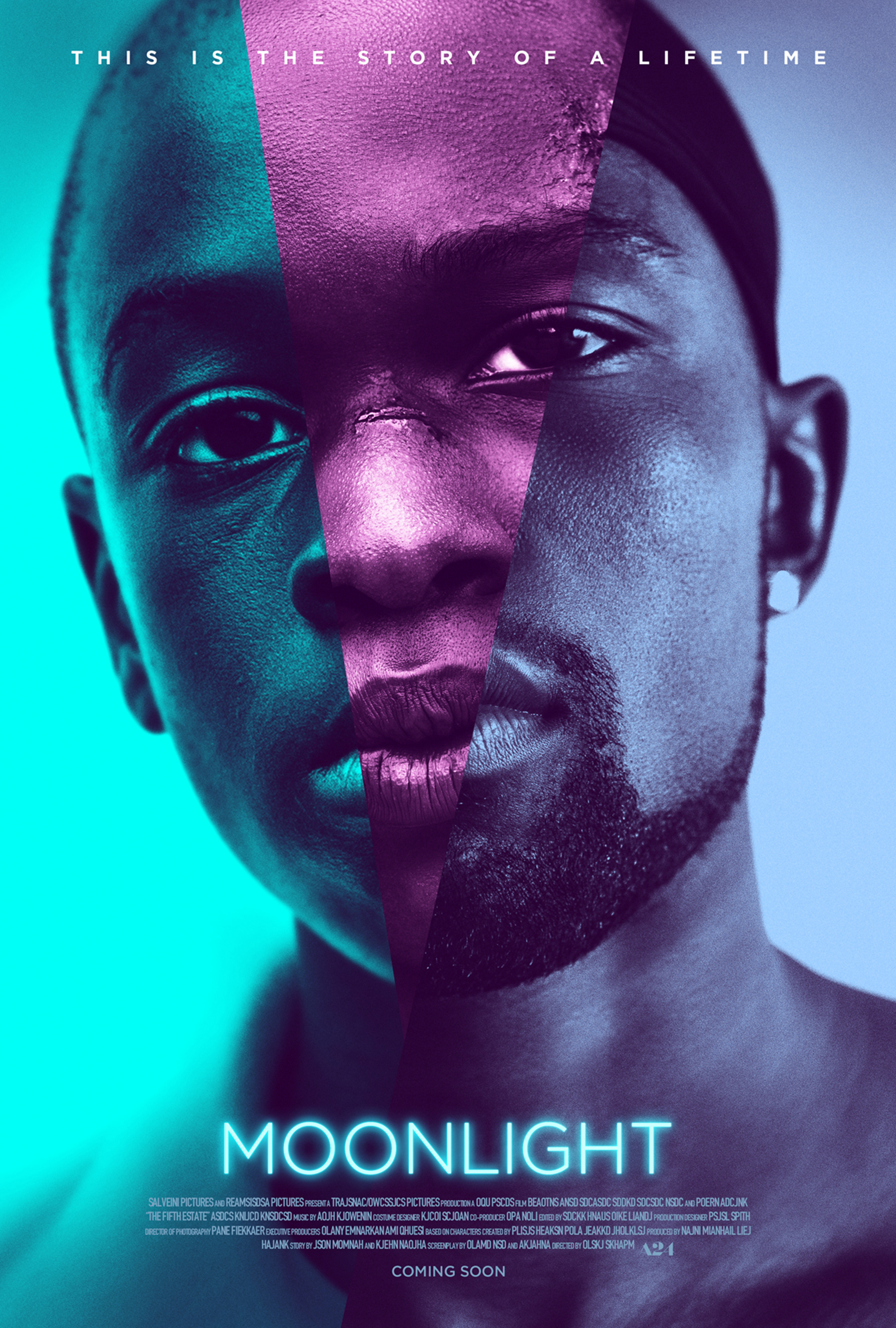
Image result for the shape of water

Thursday, March 2, 2017

2016--Moonlight, Barry Jenkins


Image result for Moonlight


2016--Moonlight, Barry Jenkins
Nominated: Arrival, Fences, Hacksaw Ridge, Hell or High Water, Hidden Figures, La La Land, Lion, Manchester By the Sea
Should have won: Lion
Be sure to see: The Boy, Deadpool, Girl on the Train, The Jungle Book, The Magnificent Seven, Swiss Army Man, The Witch
"You're not a faggot. You can be gay, but you don't have to let nobody call you a faggot."--Juan

     The 2015 Oscars caught a lot of flack for not being racially diverse. It ended up being the worst ceremony in history not because of the nominees (all of whom were deserving) but because the host, Chris Rock, made an ass of himself and a mockery of the Academy Awards' history by making racial comments at every chance. A few were expected in his monologue, but it happened all night. Because of this, it was pretty much guaranteed the 2016 awards would be more diverse. I don't feel that is a good thing just for the sake of diversity if the nominees aren't deserving. Luckily, they were. The best performances in my mind were both in Fences. One did win for supporting actress and Denzel Washington was nominated for best actor in what I feel is the his best performance of his career. But the highlight of the evening was when presenter Faye Dunaway read the wrong winner for best picture. She called the odds-on favorite La La Land only to have the announcement corrected by La La Land's producer himself. The actual winner was Moonlight.


     The first two minutes of Moonlight was one sweeping shot of Juan, a conflicted character who is a drug dealer, though still a good man. Juan finds a wondering boy and takes him home to his wife, Theresa for the night. The boy is Chirone, a quiet outsider the other kids have given the moniker Little. He rarely speaks but when he does he sounds to be about 15 though he looks 9 or 10.

    Chirone is bullied at school and at home, though not physically. His mother is a woman very easy to dislike. Clearly on drugs and jealous of her son's relationship with Juan and Theresa, she takes his money and verbally abuses him. However, I do believe her when she says she loves him. She certainly isn't evil like Precious's mother seven years ago (Mo'Nique in an Oscar winning role). It is at this young and conflicted age Chirone realizes he is gay.


     I like movies with character arcs and Chirone has one as he reaches high school and beyond. He comes into his sexuality and has an encounter with his friend Kevin. He still gets bullied but stands up for himself. It is one of those moments I cheer for a character's actions but jeer at his consequences.


     I feel the third phase of Chirone was miscast. The actors who play young and old Kevin were perfect; Jharrel Jerome and Andre Holland looked similar enough but Alex Hibbert (young Chirone) and Ashton Sanders (adult Chirone) didn't look similar at all. The older Cherone is muscular and strong while Little was...little. People grow, they work out and gain muscle, I get that. But I need an explanation because he became unrecognizable.


     Juan tells Chirone that his grandmother always said that in the moonlight black boys look blue. I found this interesting not just in the literal sense but also because Chirone was such a sad character; blue on the outside in the moonlight and on the inside with melancholy. I don't know if that is what the filmmakers were aiming for but that's what I took from it.


     Moonlight is the second best picture winner in a row I had never heard of before the nominees were announced. I was sure La La Land or Fences would win. After seeing it I understand why it won. It was good but I don't feel it was deserving of the award. But how could liberal Hollywood pass up the chance to award the prize to a movie about a gay black kid, especially after last year? I really hope it doesn't come down to this in future years. The best movie should win best picture; the best performances should win in their categories. Not everything has to be about politics. It is a good film and I recommend it. It is about life and circumstances not usually depicted in the movies. It probably isn't easy to grow up gay in the hood and I'm glad the story was told. I just have the feeling decades from now it will be looked at as "that movie they awarded because of the previous year" and that is very unfortunate.

 Image result for moonlight movie 2016

Saturday, April 9, 2016

2015--Spotlight, Tom McCarthy

 
2015—Spotlight, Tom McCarthy
Nominated: The Big Short, Bridge of Spies, Brooklyn, Mad Max: Fury Road, The Martian, The Revenant, Room
Should have won: The Revenant
Be sure to see: Ex Machina, Green Inferno, The Hateful 8, It Follows, Paddington, Straight Outta Compton, The Visit
“We got two stories here. A story about degenerate clergy and a story about a bunch of lawyers turning child abuse into a cottage industry. Which story do you want us to write? Because we're writing one of them.”--Walter Robinson

   The Academy has been known to award movies with important social themes over better made, more deserving ones. Forrest Gump over Pulp Fiction, A Beautiful Mind over Lord of the Rings, and In the Heat of the Night over Bonnie and Clyde all come to mind. The latest example falls in not because it isn't a worthy choice but because it is the first winner since I started paying attention to the Oscars that I'd never even heard of.

    I enjoyed Spotlight and felt its message of child abuse is important. It is particularly important this movie's message is heard for the past victims and the (hopefully few) future ones. But throughout the entire Oscars telecast (the worst in the ceremony's history, by the way, with Chris Rock proving himself to be the worst host the ceremony has ever seen, but that's another story), I was thinking how I was going to write up my thoughts on The Revenant. When Spotlight was announced as the winner I thought “What the hell is that? Did they just make up a title?” With Leonardo DiCaprio finally getting his much-deserved Oscar—one he should have gotten 22 years ago for What's Eating Gilbert Grape—and Mad Max: Fury Road snagging one award after another, Spotlight came out of nowhere to get the big prize.

    Spotlight is another “based on a true story” film but in this case it actually is. In 2001, a four-person investigative team working for the Boston Globe work tirelessly on a local child molestation story. Having a journalism degree myself I was scratching my head at how these people were earning their paycheck. The entire movie they were gathering data and doing interviews for a single story they were going to write at the movie's end. Was there nothing else going on? Was their section in the Globe blank every day? Apparently, 80 people in the Boston area claim to have been sexually abused by priests when they were younger. The movie seems to suggest they were all boys. Being raised Catholic, I remember there being alter girls as well as alter boys, and these cases don't seem to take place much earlier than when I was up there in the late '80s/early '90s. Some of the victims talk freely to reporters, others are more reluctant to talk. A surprising interviewee was a priest who appeared eager to talk, hiding nothing, throwing himself under the bus. His reasoning to why he doesn’t feel he was wrong for his actions left me confused on whether or not I should feel sorry for him.

    I liked a good deal of the movie and, if it really is a true story, it is an important story to tell, but I had some issues with it, some minor some not. The story takes place in late 2001 so, naturally, they have to show the inevitable Trade Center attack footage. I noticed they called it “nine eleven” and a refrigerator magnet said “9/11 never forget”. I don't remember bumper stickers and the like calling the event “9/11” so quickly after the event. But mostly it got me thinking what were the major news stories in the summer of 2001? What important stories were bumped off the headlines?

    The movie has its moments. My favorite shot is when one of the Spotlight team is in a cab and passes one of the victims who was interviewed earlier. Here he is pushing a child on a swing. He is coping with the past, life goes on. But did talking to the Spotlight team help or hurt his conscience? That particular character, I'm not sure of, but the ending of the film left a silver lining. The hard work Spotlight did for this story provides a bitter-sweet but appropriate conclusion to the film. Then it provides us with worldwide statistics for a depressing coda.

    The movie is good but I'd like to point out two things: 1. It is rated R but “frickin'” is said a lot. Odd for a movie that doesn't hold back on the molestation aspect. If you are going to be rated R and cover child rape, I don't see how censoring some four-letter words is necessary. And 2. I am not doubting the story is true and I'm not doubting priests still molest boys, but I was raised Catholic and I can tell you no priest ever seemed inappropriate to me. Maybe the media would rather people see the Catholics as perverts but can we also be reminded how the Catholic church is the #1 organization in the world for giving to the poor? You've heard the term a few bad apples ruin the bunch? Spotlight does a hell of a job picking them out. 
 

Monday, June 22, 2015

2014--Birdman: Or (The Unexpected Virtue of Ignorance), Alejandro G. Inarritu

 
2014—Bird Man: Or (The Unexpected Virtue of Ignorance), Alejandro G. Inarritu
Nominated: American Sniper, Boyhood, The Grand Budapest Hotel, The Imitation Game, Salma, The Theory of Everything, Whiplash
Should have won: American Sniper
Be sure to see: Foxcatcher, Godzilla, Into the Woods, Nightcrawler, Wild, Wish I Was Here
“I'm an answer to a fucking trivial pursuit question!”--Riggan Thompson

      In 1948, Alfred Hitchcock's Rope had an interesting gimmick. The movie was about a dead body hidden in a trunk under everyone at a cocktail party's noses. The gimmick is that it was shot in 10 long takes, a movie people remember as “that Hitchcock done in one take”. This is risky because if there is a mistake deep into the scene, the whole thing would be started over since there is no other angles to begin. Not to mention, there are no edits to cover mistakes. 2002's Russian Ark and a recent but bad thriller called Silent House had the same approach. Then, in 2014, the Academy's best picture Birdman pulls it off again...to an extent.

      Because the movie takes place over a couple of days, we know it was not done in one take, it was done in 16 in fact, which is still pretty impressive. Careful viewers can spot the dark spots where the cuts were made and there is an effective time lapse to indicate night to day. The one-take gimmick is impressive, and no doubt meticulously blocked and rehearsed for each actor and crew member, but beyond that the movie itself was pretty neat. However, its artiness might not sit well with everyone. To add to the film's atmosphere, the score is entirely a man on the snare drums who, on occasion, appears on screen like the orchestra in Blazing Saddles. However, his appearances might or might not be for laughs.

     Michael Keaton, in an Oscar worthy role, plays Riggan Thompson, a stage actor who is acting in and directing the play “What we talk about when we talk about love”. He is a former film actor, best known for playing a super hero called Birdman. Twenty years ago he declined making Birdman 4. Incidentally 22 years prior to this movie was 1992 when Keaton portrayed the Caped Crusader in Batman Returns. He, like his character in this film, did not return for the next sequel.

      Though Keaton drives the movie, some others stand out like Emma Stone who plays his daughter and Edward Norton who plays is costar in the play. Both are Oscar nominated performances and surprisingly, Zach Galifianakis shines in a serious role as Riggan's agent.

     Riggan shows some telepathy throughout the movie. It opens with him floating in his dressing room wearing tighty whities and is able to throw items across the room with his mind. He also still hears his Birdman character's voice in his head as sort of an alter ego. Late in the film he takes his telepathic ability to a whole new level. That's all I'll say about that.

     The best and certainly most famous scene is when Riggan gets locked outside just before he goes onstage again. In his second time onscreen wearing only underwear, he has to walk through a crowd while trying to make it back to the theater. After this mishap gets blasted all over you tube, his daughter takes a positive spin on it. I liked her view. It turned a particularly goofy moment into a thought provoking one.

     The subtitle of the movie is a reference to the headline of an unfavorable review of his play, and I'm not sure it is necessary for the title of this movie, especially since it will never be referred to in its entire title, I predict. I compare it to Dr. Strangelove. How many people actually continue with Or How I Learned to Stop Worrying and Love the Bomb? And, yes, the parenthesis are supposed to be after the word “or”.

      The most important thing I'd like to point out is, though the movie is good, it is in no way better than American Sniper. But there is no way it would lose to that movie, not in liberal Hollywood. An artsy, gimmicky movie about show business vs a movie about a sniper in an unpopular war is a huge mismatch in this day and age. True, war movies have taken home the prize many times in the past but none with such subject matter as Eastwood's film. American Sniper is a far superior film, despite the fake baby.


*Note: Michael Keaton and Bradley Cooper were both beaten by Eddie Redmayne for The Theory of Everything despite giving knockout performances. Cooper continues to be snubbed year after year but there is another performance of which to take note. Jake Gyllenhaal's performance in Nightcrawler is my favorite performance of the year in my favorite movie of the year. Take a look. 
 

Thursday, June 18, 2015

2013--12 Years a Slave, Steve McQueen

 
2013—12 Years a Slave, Steve McQueen
Nominated: American Hustle, Captain Phillips, Dallas Buyers Club, Gravity, Her, Nebraska, Philomena, The Wolf of Wall Street
Should have won: Dallas Buyer's Club
Be sure to see: Blue is the Warmest Color, The Conjuring, Evil Dead, 42, Star Trek: Into Darkness, You're Next
“I don't want to survive; I want to live,”--Solomon Northup

     Directed by British filmmaker Steve McQueen (no, not the Steve McQueen from The Blob and Bullitt), 12 Years a Slave is one of the most depressing, rough, unflinching movies about slavery ever made. Perhaps it is the most though Roots tells a broader story. But for a two hour movie, 12 Years a Slave certainly tells a more depressing story than Amistad does, though I think Amistad is the better movie. 
 
     I didn't really want to watch this movie. I was hoping Dallas Buyers Club would win the Oscar. It was a fantastic movie, for one, but also I just didn't want to see this movie. But since it won I knew I had to knock it out. It was very good and an important subject, but a slavery is a tale that is not new to Hollywood. Dallas Buyers Club, though set in the early '80s, is about an issue which still runs rampant today, the AIDS crisis. But both stories are important, of course. Both deal with characters in danger of death. And both are true.

     It is 1841 and Solomon Northup, a former slave and current family man living in Saratoga, New York, has a skill for playing violin. He seems to be well-liked around town, even by the whites and is especially friendly with Mr. Parker, a shopkeeper. When two men offer Solomon a position in their circus, he accepts. What he doesn't realize is the men intend to sell him into slavery and he wakes up in shackles and accused of being a Georgia runaway. Protesting his freedom does him no good as his papers have been lost.

     Northup is sold into slavery with the new name Platt and his new owner is is Ford. Ford seems to be a kind man, as far as a slave owner could be portrayed I suppose. Remember Robert Reed's character in Roots? Until he sold Kizzy away, he seemed to be more kindhearted than most slave owners would be. That is how Ford is shown here, even when Solomon tries to share his tale. Sure, he won't offer aide but he doesn't punish, either.

     Ford's chief carpenter is John Tibents (according to the credits; Tibeats according to IMDB) played by Paul Dano who is an actor who has kind of grown on me. Perhaps he is best known for his role in Little Miss Sunshine or There Will Be Blood, but he shines most in Ruby Sparks. Here he shines his acting skills too, but his character doesn’t shine. Tibents is a cruel man but not in the way some slave owners have been depicted in movies. His cruelty doesn't come from whipping or beating, it comes from intimidation. One of my favorite parts of the movie comes from Tibents. I'm hesitant to use the word “favorite” since it occurs in a negative light but not all great movie scenes have to come from an upbeat occurrence; take Psycho's shower scene or the final shot of Planet of the Apes for instance. Tibents has a number of his new slaves lined up, about to tell them what they are to expect. He does it in a song and has them clap along as he sings it. The song is about what they can expect if they try to escape and I thought of two things. One, it is clear he has sung this song on more than one occasion to various groups of workers and two, well, it is kind of a catchy tune. I know I'm supposed to be sickened by it and, in truth, I am. But I'd be lying if I said it wasn't effectively infectious.

     Solomon must have felt low. One could imagine how bad life would be as a slave but to know he was, and still should be, free would be infuriating. But he is an educated man and this causes a dilemma. On one hand, it is very dangerous to let anyone know he is able to read and write. On the other, he must use all his strengths to better a situation.

     McQueen does a fantastic job of letting the camera stay rolling, making for long shots. Two examples stand out. When Solomon fights back to Tibents' cruelty, he is strung up by the neck in a way that keeps his toes on the ground so he won't strangle. McQueen stays with this image for a full minute and a half. He hangs; people walk in the background, paying no attention. There is no music, only the wind blowing and cicadas chirping. However, before he is finally cut down a little over three minutes after being strung up, the camera angle had changed. I was a little disappointed in that. Staying in one shot was powerful for me, changing lessened the mood, but only slightly. I think McQueen made a mistake doing a different angle but the scene still works.

     Solomon is sold again to a man named Epps and here he meets Patsy (Lupita Nyong'o in an Oscar winning role). Along with having a good eye for letting the camera linger, McQueen is great at the use of depth in his foregrounds and backgrounds. Take when Solomon retrieves Patsy and tells her to stay clear of Epps. Epps wants to know what Platt and Patsy were talking about and proceeds to chase him around the yard and through a pigpen. Though we are supposed to focus on the two running, notice the people fleeing for cover in the background. Similar to the hanging sequence, it seems the background's purpose is to be ignored and noticed at the same time.

     One of the most powerful scenes occurs with Patsy is whipped after going missing trying to acquire an item and I don't think I should spoil what that item is. I feel it is this sequence that won Nyong'o her Oscar. And the scene is capped off by a camera tilt, showing the fallen item. A great shot in a movie filled with brilliant shots.

     An Amish man appears late in the movie and Solomon sees him as his last hope ticket back home. From this point the movie reaches its home stretch. The final 10 minutes or so are perfect and I think if they had gone any further with the ending, in a “What happened next?” style it would have been overkill. Instead, the movie wraps up in title cards explaining what happened to Solomon and the fate of his kidnappers. However the text was so small it was virtually impossible to read. As were the credits.

     It was a very good and moving film but I had two issues. One, there were never any title cards. Ever. So the title could or could not be true. I never saw a “two years later” or a date pop up, except early on. So there really is no indication that the title of the movie is accurate, not that I doubt it had spanned a dozen years, the filmmakers just expect us to take their word for it. The other issue I had was the way the slaves spoke. Their dialogue sounded straight out of a Shakespearean play, almost as though they were all educated. But it is a good film. I don't feel it should have beaten Dallas Buyers Club or Gravity, but years from now it certainly won't fall into the forgotten winners category. But I also have no desire to rush out see it again.
 

Monday, June 15, 2015

2012--Argo, Ben Affleck

 
2012—Argo, Ben Affleck
Nominated: Amour, Beasts of the Southern Wild, Django Unchained, Les Miserables, Life of Pi, Lincoln, Silver Linings Playbook, Zero Dark Thirty
Should have won: Beasts of the Southern Wild
Be sure to see: Abraham Lincoln: Vampire Hunter, Cabin in the Woods, Frankenweenie,The Grey, The
Hunger Games
“There are only bad options. It's about finding the best one,”--Tony Mendez

     Some movies are based on true events. Others have situations so outlandish they could only happen in the movies. Argo happens to be a movie containing both.

     The opening narration explains that in 1950, Iran elected a prime minister they call a shah who was replaced a few years later by a tyrant. He was ruthless and people starved. When he became ill with cancer, he was given asylum in the United States and this caused the Iranian people to assemble outside the U.S. Embassy demanding the shah be turned over to the people to be hanged. The outrage of the people is where the movie begins.

     Upon the taking of the embassy, six Americans manage to escape and find temporary refuge with the Canadian ambassador in Tehran. Through some searching, using children in a sort of sweatshop style, the Iranians were able to assemble pictures of the missing Americans. The group knows if they are found they will be executed. Meanwhile, back in the States, there are meetings to try to find a way to get the people home safely. CIA Agent Tony Mendez is called to take the reigns. Mendez is played by the film's director, Ben Affleck. The role is unlike any I've seen Affleck play before and with his beard it makes him look like Die Hard's Hans Gruber. He hatches a plan to get the Americans home. It is a plan so risky, outrageous, and ridiculous it has to be made up for this movie...but it really happened. While watching a scene from Battle for the Planet of the Apes, Mendez figures he can go to Tehran posing as a movie producer, round up the wanted Americans who can pose as a film crew on a scouting project, and return home. Taking extra precaution, back home they make posters, have a script written, hold press meetings for the movie's release, making everyone think the movie is legit. Mendez goes into the project with an alias of Kevin Harkins; make-up wizard John Chambers, who is known for his B-movie schlock films, is in on the mission; and Lester Siegel (Alan Arkin in an Oscar winning role) helps with the project as well. Other than a choice few, nobody knows the project is a sham. The fake movie is to be called “Argo”. What does it mean? “Argo fuck yourself” Chambers, Mendez, and Siegel throw at each other off and on.

     Much of the movie is full of tension. While a good deal of it is set in America with the launch of the mission, the best scenes are in Tehran with the group, waiting in fear of what will become of them. They know they can't go outside; people are being hanged and shot. When the shredded papers are being pieced together to reveal the identities of the group, we know time is tight. And when “Harkins” is applying at the local film commission for a permit to film, finding the right moment to address the group, he sees a man hanging from a crane; a man who looks like him. Was it in his mind? Is it a foreshadowing to the audience? It is a chilling visual that could very well come true.

     Mendez introduces himself to the group as Kevin Harkins and gives them all new identities with Canadian backgrounds. They have to memorize every detail about their new lives and Mendez demonstrates how imperative it is they not buckle under pressure in a startling fashion. I felt for the group because on their location scout they know they are not filmmakers. When approached with common questions a film crew would be asked, a few hesitate. One looks through the wrong end of his viewfinder and “Bob” (the alias of the so called director of Argo) is asked what the theme of the movie will be. His answer is confusing, muddled, and uneducated. These scenes were key from a plot standpoint and an audience standpoint. The plot works because, knowing these people are not real filmmakers, they would make these kinds of mistakes. On the other hand it works from someone watching the movie's standpoint because it builds our tension and makes us worry for the group, and for Mendez who has risked his life to bring them home.

     The movie is full of intense sequences but the most might be when the group almost makes it to the plane but is pulled aside for further questioning. One of the best moments is when one who can speak Farsi, pulls out the storyboards and elaborates on what the plot of the movie is. I've been to a number of horror conventions and the security started acting like I do, excited about the space movie that is to be filmed in their country.

     From the opening escape from the embassy to hiding out to the scouting project to the escape, Argo offers intense emotions. The parallel story back in America is more lighthearted with Chambers and Siegel throwing jokes all the time. Usually I'm not a fan of comic relief in intense situations. It seems to be the thing to do but I always say if something is supposed to be scary, let it be scary; if it is supposed to be intense, let it be intense. Leave the humor out of it. This is a case I pushed that aside. Maybe because I've always liked Alan Arkin and John Goodman, and they furnish most of these moments. Not to mention the lines they throw out are in fact humorous and don't reach too far.

     The best moments are in the final act with the attempted escape that has a hitch. The final credits depicted the actors next to the real people involved is something any movie “based on a true story” should do. That term is getting thrown around so much I wonder what stories really are true. I liked the movie a lot but I know of a lot of people who are more knowledgeable of the actual case who didn't enjoy it because they said it wasn't accurate enough. I'm not the one to judge based on that, I just know what the movie told me. It held my attention, I cared for the characters' plight, and the whole rescue was accomplished because Tony Mendez was watching Battle for the Planet of the Apes. Just the fact an important part of history was sprung from one of the sequels of one of the greatest science fiction series ever produced says something in defense of film making.

     A bit of Oscar trivia: While Argo won best picture of 2012, Ben Affleck was not nominated for best director. This marks the first time since1989's Driving Miss Daisy the director of the movie that would win best picture was not given a nomination. Also, after watching this movie I would kind of like to see the movie Argo. Not Affleck's version, that's what this review is for. I'm talking about Kevin Harkins'. I bet it would be a blast.